
Choosing the Right Industrial Fans for Your Processing Facility
August 12, 2026
Air movement plays an important role in many industrial processes. From maintaining proper ventilation to supporting material handling and equipment performance, reliable airflow helps facilities operate safely and efficiently.
For many manufacturing and processing operations, Industrial Fans are essential components that keep air moving through production environments, ventilation systems, and process equipment. These systems are designed to handle demanding conditions while providing the airflow required for specific industrial applications.
Selecting the right industrial fan requires more than choosing equipment based on size alone. Factors such as airflow requirements, pressure needs, operating conditions, facility layout, and the overall process must all be considered to create an effective solution.
With decades of experience serving the process industry, R & S Process Equipment Sales, Inc. provides engineered equipment solutions designed around the unique needs of industrial operations nationwide.
What Are Industrial Fans?
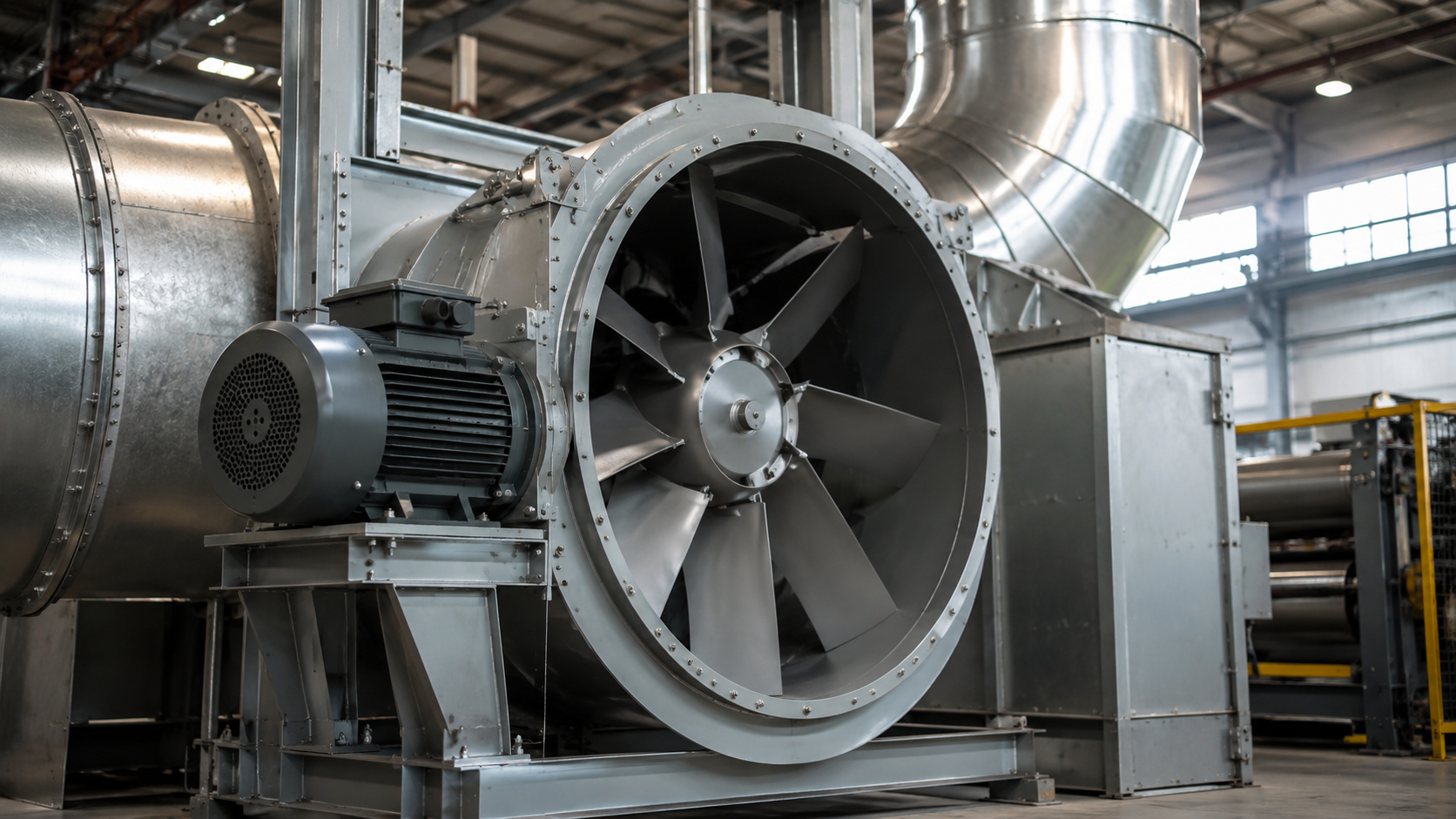
Industrial fans are mechanical devices designed to move large volumes of air or gas through industrial systems. Unlike standard commercial fans, industrial fans are built to handle demanding environments, continuous operation, and specialized process requirements.
They are commonly used in applications involving:
- Manufacturing ventilation
- Material processing
- Dust collection systems
- Air pollution control systems
- Drying operations
- Cooling applications
- Combustion processes
- Air circulation throughout industrial facilities
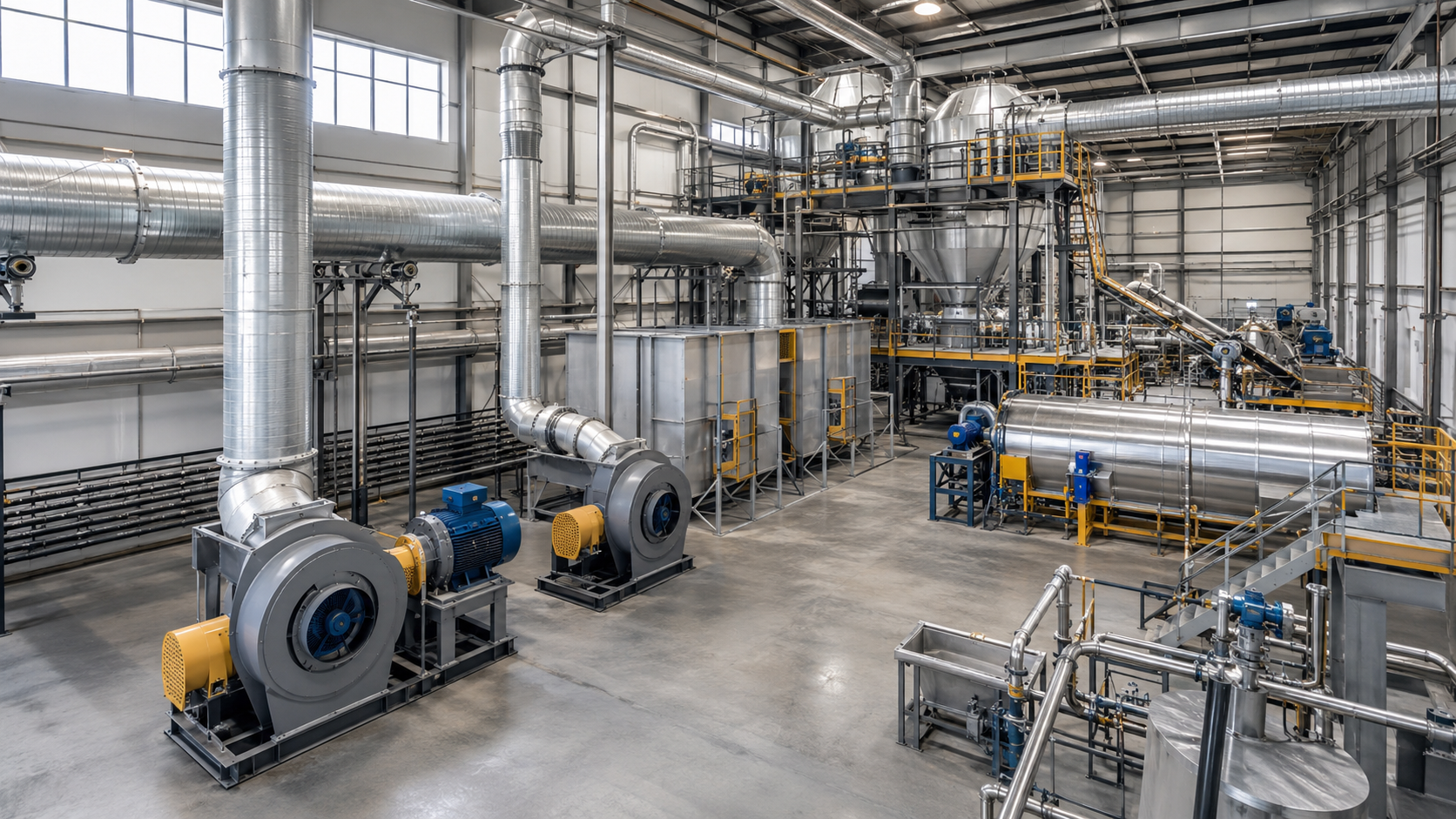
Industrial fans may be installed as standalone equipment or integrated into larger process systems that include ductwork, filtration equipment, separators, and other components.
The purpose of an industrial fan is not simply to move air. A properly selected fan helps maintain the airflow, pressure, and system performance required for the entire process.
Why Proper Airflow Matters in Industrial Operations
Airflow affects many areas of a processing facility. When ventilation and air movement are not properly managed, facilities may experience inconsistent production conditions, increased equipment strain, or difficulties controlling airborne materials.
Supporting Better Process Performance
Many industrial processes depend on consistent airflow to operate correctly.
For example, dust collection systems rely on fans to create the airflow needed to capture airborne particles and move contaminated air through filtration equipment. Without the correct airflow levels, collection performance may decrease.
Industrial fans help provide the movement required to keep process systems operating as intended.
Improving Facility Ventilation
Manufacturing environments often generate heat, dust, fumes, or other airborne materials. Proper ventilation helps manage these conditions by continuously moving air throughout the facility.
An effective ventilation system can help create a more controlled working environment while supporting overall facility operations.
Protecting Equipment Performance
Industrial equipment often operates in challenging conditions. Heat buildup, airborne particles, and poor air circulation can affect machinery and surrounding components.
By maintaining proper airflow, industrial fans help support equipment environments that are better suited for continuous operation and long-term reliability.
Types of Industrial Fan Applications
Different industrial processes require different airflow solutions. The right fan selection depends on the application, operating conditions, and performance requirements.
Fans for Dust Collection Systems
Dust collection systems depend on carefully controlled airflow. Industrial fans help move air from collection points through ductwork and filtration equipment.
The fan must provide enough pressure to overcome resistance from filters, ductwork, and other system components while maintaining the airflow needed for effective dust capture.
Process Ventilation Fans
Process ventilation applications require reliable air movement to support specific manufacturing operations.
These systems may help remove heat, fumes, or airborne contaminants while maintaining proper ventilation throughout production areas.
Material Processing Applications
Some industrial operations involve moving air as part of the production process itself.
Industrial fans may support applications involving powder processing, drying, conveying, or other material handling processes where controlled airflow is necessary.
Factors to Consider When Selecting Industrial Fans
Choosing the correct industrial fan requires an understanding of the entire system where it will operate.
Airflow Requirements
The amount of air a fan needs to move is one of the most important considerations. Different processes require different airflow volumes depending on equipment size, production rates, and environmental conditions.
A fan that is too small may not provide enough performance, while an oversized fan may consume unnecessary energy.
Pressure Requirements
Industrial systems often include resistance from ductwork, filters, dampers, and other equipment.
The fan must be capable of producing the required pressure to move air effectively through the complete system.
Operating Environment
Industrial conditions can vary significantly between facilities. Factors such as temperature, humidity, material type, and airborne particles can influence fan selection.
A fan used in a clean ventilation application may require different specifications than one operating in a demanding material processing environment.
System Integration
Industrial fans rarely operate alone. They are typically part of a larger process system.
The fan must work together with other components including ductwork, filtration equipment, collection systems, and processing machinery.
Proper integration helps improve system performance and reliability.
Common Signs an Industrial Fan System May Need Evaluation
Industrial equipment experiences wear over time, and airflow requirements may change as facilities expand or production processes are modified.
Some signs that a fan system may need attention include:
Reduced airflow performance
Increased operating noise
Higher energy consumption
Excessive vibration
Inconsistent process performance
Changes in production requirements
These issues may indicate that the fan, surrounding system components, or overall airflow design should be reviewed.
In some cases, adjustments to equipment settings, system modifications, or component upgrades may improve performance without requiring a complete replacement.
The Importance of Engineered Airflow Solutions
Every processing facility has different requirements. A fan system designed for one operation may not provide the same results in another environment.
Effective industrial airflow solutions begin with understanding the complete process. Equipment type, production goals, facility layout, and environmental conditions all influence the best approach.
Engineering experience helps ensure that industrial fans are selected and configured to support the actual needs of the operation.
R & S Process Equipment Sales, Inc. works with industrial customers to provide process solutions that align with their operational goals. With experience in powder processing, material reduction, and air quality control systems, the company understands the importance of properly designed process equipment.
Improve Your Process With Reliable Industrial Fan Solutions
Reliable airflow is an important part of maintaining efficient industrial operations. From ventilation and cooling to dust collection and process applications, properly selected Industrial Fans help support consistent performance and better system control.
Choosing the right equipment requires careful consideration of airflow needs, operating conditions, and the complete process environment.
Since 1973, R & S Process Equipment Sales, Inc. has helped industries nationwide with engineered process equipment solutions designed for demanding applications.
If your facility needs help evaluating industrial fan requirements or improving an existing airflow system, contact R & S Process Equipment Sales, Inc. to discuss a solution built around your operation.